
A major business disruption demands disciplined executive action, not improvised heroics. Leaders should protect people, contain harm, establish crisis governance and restore critical services in sequence. They must communicate credibly, meet legal duties, preserve cash and capture lessons.
The event may be a cyberattack, fire, flood, supplier collapse or prolonged outage. The cause changes the technical response. The executive principles do not: put safety first, separate facts from assumptions and keep one accountable recovery structure.
In this article
What counts as a major business disruption?
A disruption is major when normal management routines cannot protect people, meet essential obligations or restore priority operations quickly enough.
Severity depends on consequences: risk to people, duration of service loss, asset damage, customer impact, regulatory exposure and cash pressure. A two-hour outage can be major for a time-critical operation, while another company may absorb it through tested workarounds.
Public Safety Canada treats response and recovery as connected functions. Response stabilizes the event; recovery restores an acceptable operating state and reduces recurrence.
10 executive actions after a major disruption
The executive team should move through a controlled sequence while several workstreams run in parallel.
1. Protect people and stop further harm
Account for employees and visitors, follow emergency-services direction and make unsafe areas or systems inaccessible. Do not trade safety for uptime. Confirm who has authority to evacuate, isolate equipment or suspend service.
2. Activate crisis governance
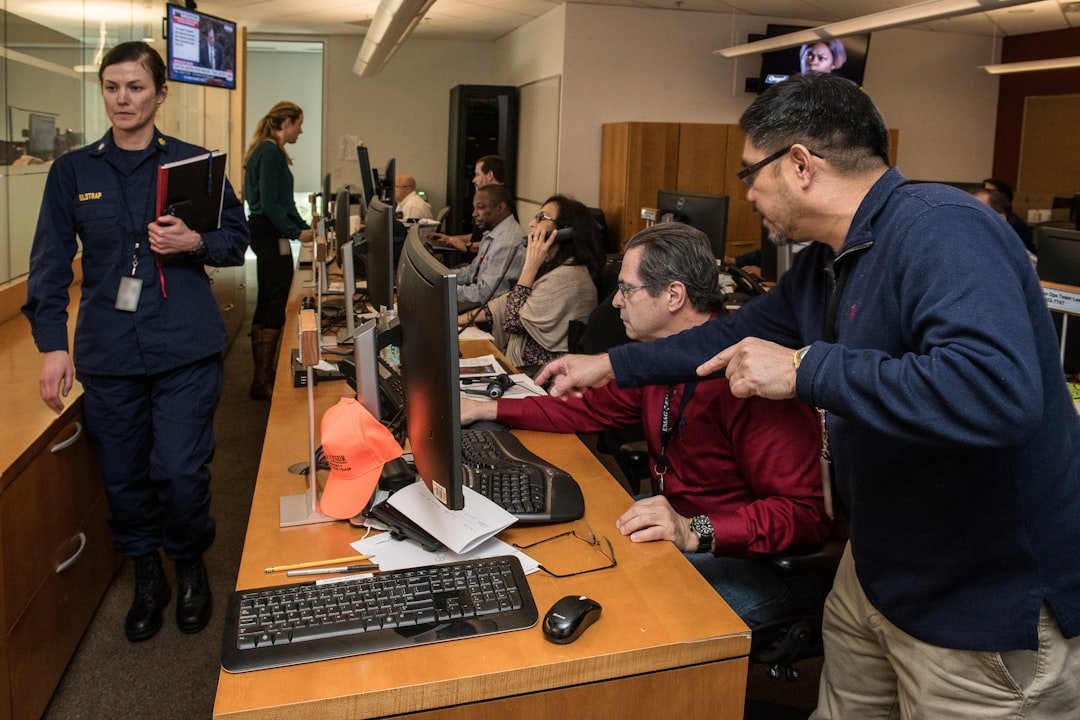
Name an executive sponsor, incident commander and leads for operations, technology, communications, people, finance and legal or privacy issues. Define decision rights and escalation thresholds. Executives provide direction without crowding out technical responders.
3. Establish facts and preserve evidence
Maintain a time-stamped decision and action log. Separate confirmed facts, reasonable assumptions and unknowns. For cyber or suspected criminal events, preserve logs, devices and documentation, and obtain qualified advice before making changes that could destroy evidence.

4. Prioritize critical services
Use the business impact analysis, recovery-time objectives and current customer commitments to decide what must return first. Activate alternate sites, manual processes, substitute suppliers or remote-work arrangements where appropriate. Defer lower-value activity so scarce people and systems support essential outcomes.
5. Communicate with a reliable rhythm
Tell employees, customers, suppliers, owners and other stakeholders what is known, what remains uncertain, what action is underway and when the next update will come. Use one approved source of truth. Accuracy and cadence build more trust than premature certainty.
6. Assess legal, regulatory and contractual duties
Ask counsel and accountable specialists to review privacy, employment, safety, environmental, insurance, securities and contractual requirements. Under PIPEDA, certain breaches of security safeguards may require reporting, notification and records when the law applies. Provincial rules and sector obligations can differ.
7. Protect liquidity and commercial relationships
Create a short-term cash view covering lost revenue, emergency purchasing, payroll, claims, customer credits and recovery costs. Use a dedicated incident cost code, preserve insurer evidence and identify customers or suppliers requiring executive contact. Cash pressure often outlasts the physical event.
8. Restore operations safely
Define restart criteria before pressure mounts. Validate equipment, system access, data integrity, controls, staffing and downstream capacity. A phased restart with explicit approval is safer than declaring victory when the first system comes online.

9. Govern the transition to recovery
Move to recovery governance when danger is controlled and priority operations are stable. Keep owners for backlog reduction, customer remediation, control repair, workforce support and financial recovery. Do not dissolve the structure while material risks remain.
10. Complete an after-action review
Once the situation stabilizes, examine root causes and the performance of plans, suppliers, communications and decisions. Convert findings into funded actions with owners, deadlines and retesting. ISO 22301 emphasizes monitoring, review and continual improvement, not a plan left on a shelf.
What should executives track during recovery?
A concise recovery dashboard should show outcomes, residual risk and decisions required.
- People accounted for, injuries and employee-support needs
- Availability of critical services against recovery targets
- Backlog, order fulfilment and priority customer commitments
- Data integrity, control exceptions and unresolved security exposure
- Cash runway, incident cost, claims status and revenue at risk
- Customer complaints, supplier constraints and stakeholder sentiment
- Outstanding notifications, corrective actions and overdue decisions
Every red measure should have an owner, a decision date and a stated next action.
A practical Canadian business example
Consider a Canadian distributor whose warehouse is inaccessible while its order system is also offline.
The team first confirms everyone is safe and appoints an incident commander. Operations identifies urgent customer orders; technology preserves evidence and establishes a clean recovery environment; procurement secures temporary storage and carrier capacity; finance opens an incident cost code and updates a 13-week cash forecast.
Customer messages identify affected orders and the next update time. Legal and privacy specialists assess notification duties. The company restarts priority fulfilment through a validated manual process, then restores normal operations in stages. One coordinated structure outperforms disconnected departmental activity.
Common executive mistakes after disruption
The costliest mistakes usually come from unclear authority, weak information discipline or a rushed restart.
- Allowing multiple teams to issue conflicting instructions or updates
- Treating an unverified assumption as a confirmed cause
- Restoring every process instead of protecting the few that matter most
- Ignoring employee fatigue, family needs and psychological safety
- Promising recovery dates before dependencies are understood
- Closing the incident before claims, controls and corrective actions are complete
Frequently asked questions
These answers clarify the decisions executives most often face after a disruption.
Who should lead after a major business disruption?
A designated incident commander should coordinate response, supported by an executive sponsor who sets priorities, removes barriers and remains accountable. The best leader depends on the event, but roles and decision rights should be established before a crisis.
When should a company communicate with customers?
Communicate promptly when service, commitments, safety, privacy or customer decisions may be affected. Share verified facts, practical implications and the next update time. Do not wait for complete certainty, but do not speculate.
When is a major business disruption over?
It is not over when one system restarts. Close the response phase only when immediate harm is controlled, critical services are stable, required notifications are managed and residual risks have accountable owners. Recovery actions may continue much longer.
Turn disruption into a stronger operating system
A well-managed recovery protects today’s business and improves tomorrow’s resilience.
Praevion Consulting Inc helps leadership teams clarify crisis governance, continuity priorities, recovery measures and practical improvement plans. To strengthen your organization’s response and recovery capability, contact Praevion Consulting Inc.
Sources
Primary standards and Canadian government guidance informed this article.
- Public Safety Canada, Federal Policy for Emergency Management
- Public Safety Canada, Audit of Business Continuity Planning
- Canadian Centre for Cyber Security, Incident Response Planning
- Office of the Privacy Commissioner of Canada, PIPEDA Findings #2021-002
- ISO 22301:2019, Business continuity management systems
- ISO 22320:2018, Incident management
- ISO 22361:2022, Crisis management
Photo credits: CDC, Rodeo Project Management Software, Alberto Rodríguez and Dimitar Belchev on Unsplash.
